
Building a Cyber-Anime World for Ninajirachi x Sabukaru
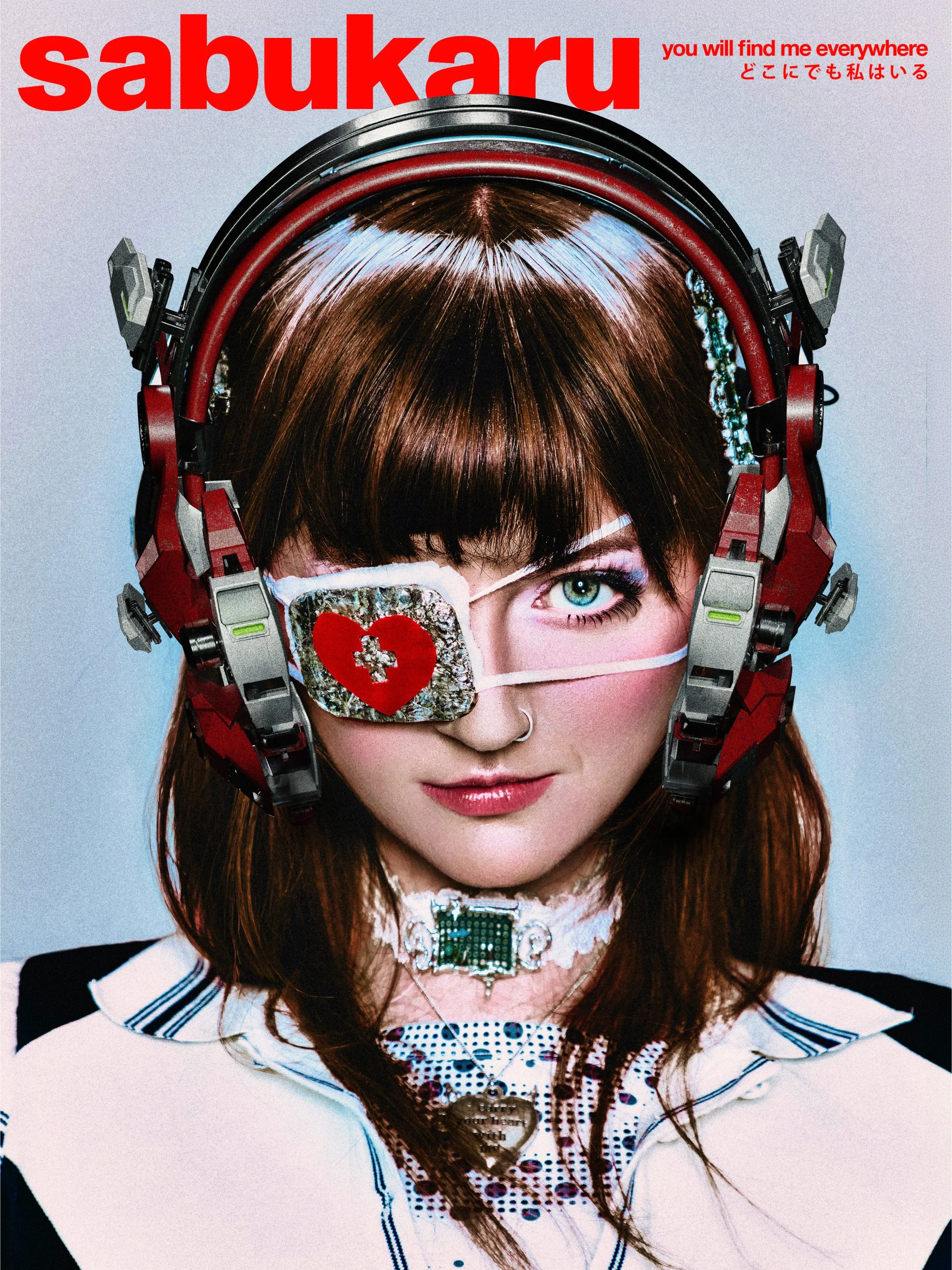
Some shoots start with a location scout. This one started with a mood board full of CRT monitors, Game Boy Colors, and 2000s anime eye makeup. When Sabukaru brought me on to photograph Ninajirachi for their cover story, the brief was clear from day one: build a full retro-gaming, anime-inspired cyber world around her — not just shoot a portrait against a backdrop, but construct an entire universe.
This one was a genuinely collaborative production, and it only works because of the team behind it.
The Concept
The idea was to turn Ninajirachi into a character — part idol, part cybernetic anime heroine, part glitching video game avatar. Think heart-shaped eyepatches, exposed circuitry, chrome headphones, and a wardrobe that looked like it walked straight out of a 2000s tech-fetish anime. The Sabukaru masthead itself leaned into this with bold red type and Japanese type treatment, setting the tone before you even got to the images.
Bringing the CGI to Life: Jinbeom Park
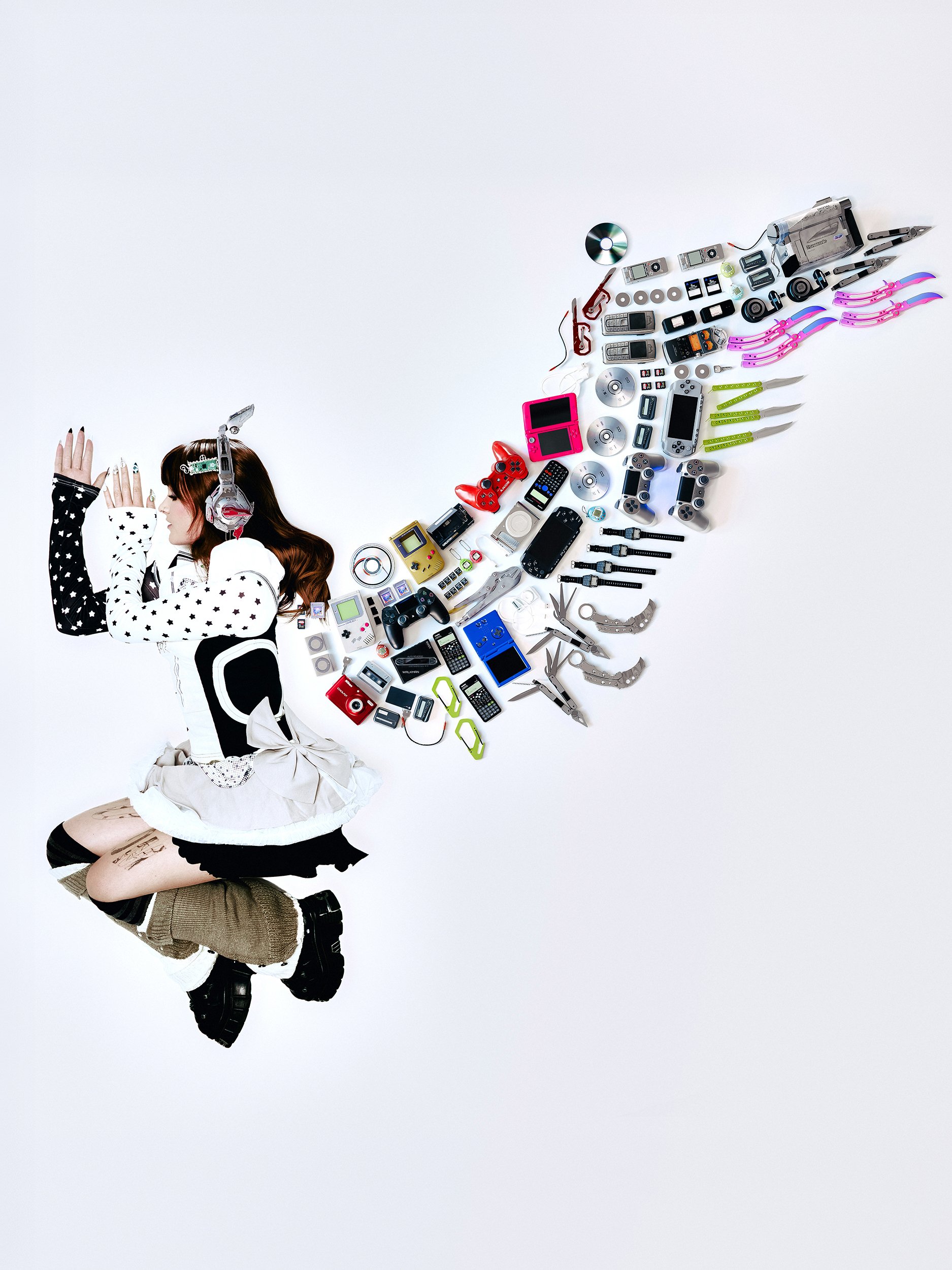
None of the sci-fi environments in this story existed in real life. That's where Jinbeom Park (@tec1n) came in. Jinbeom built out the fully CGI server-hallway world — an infinite corridor of glowing blue server racks and floating light panels that Ninajirachi appears to float within, complete with digital wings and floating UI-style graphics. He also built the surreal "exploded" composition, where a flat-lay of retro tech — Game Boys, PSPs, flip phones, even a pair of butterfly knives — extends outward from her like a digital wing made of gadgets. That image alone took an enormous amount of technical precision to make every object read as intentional, not chaotic.
Jinbeom's work is the backbone of what turns this from "photos of a musician" into "a fully built universe she exists inside." CGI like this lives or dies on how convincingly it blends with the photographed subject, and his integration work is what sold the entire concept.
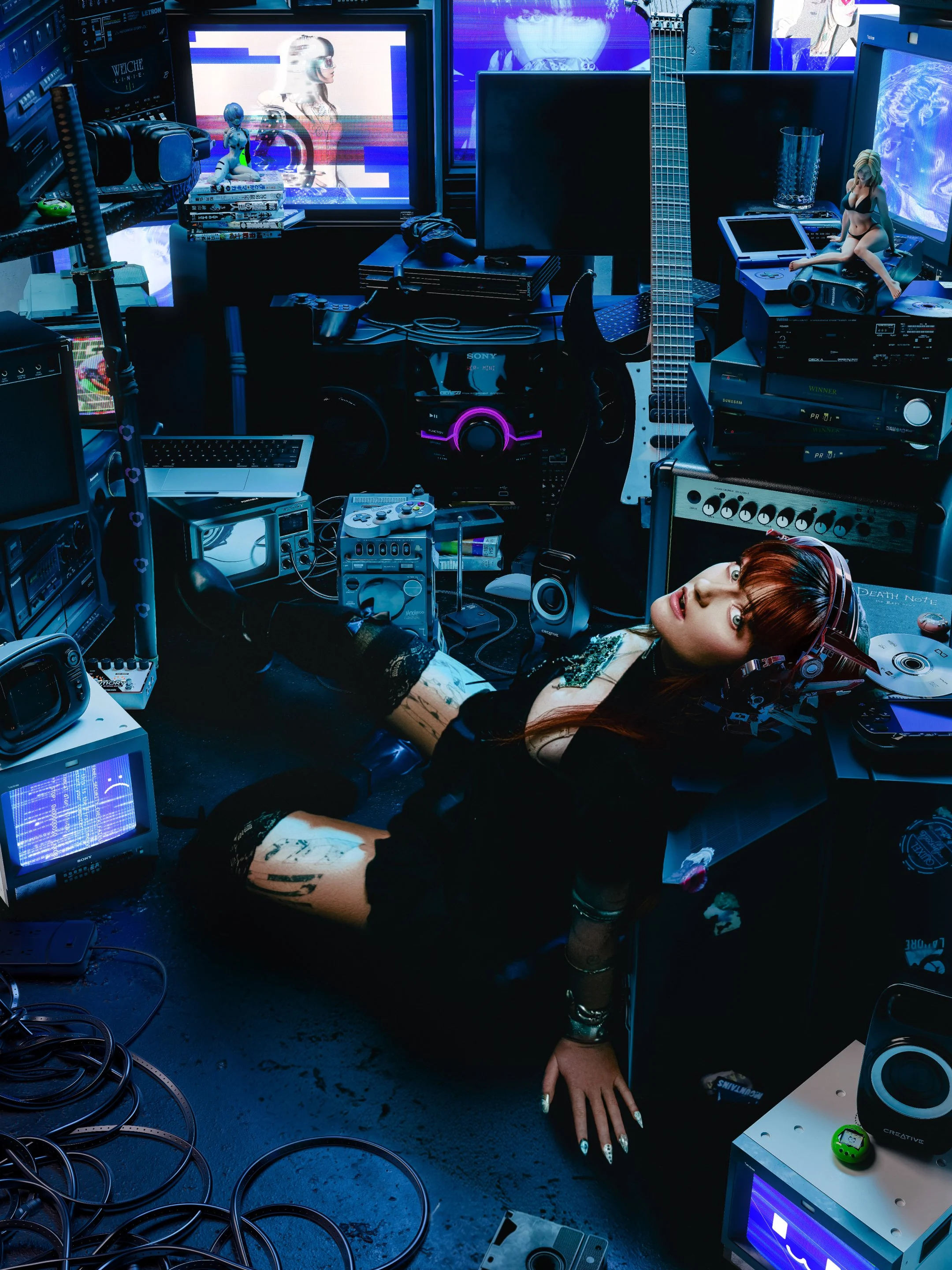
Graphic Design That Ties It Together: Mike Sunday
Every strong editorial story needs a design language holding it together, and that's where Mike Sunday's graphic design work came in. From the bold "sabukaru" masthead treatment to the glitch-text UI overlays, star icons, and Japanese typography woven throughout the spread, Mike's design choices are what push these images from "photo shoot" into "magazine world." The bilingual type treatment — English paired with Japanese script — wasn't just decorative; it reinforced the entire retro-Japanese-tech aesthetic we were building from the ground up.
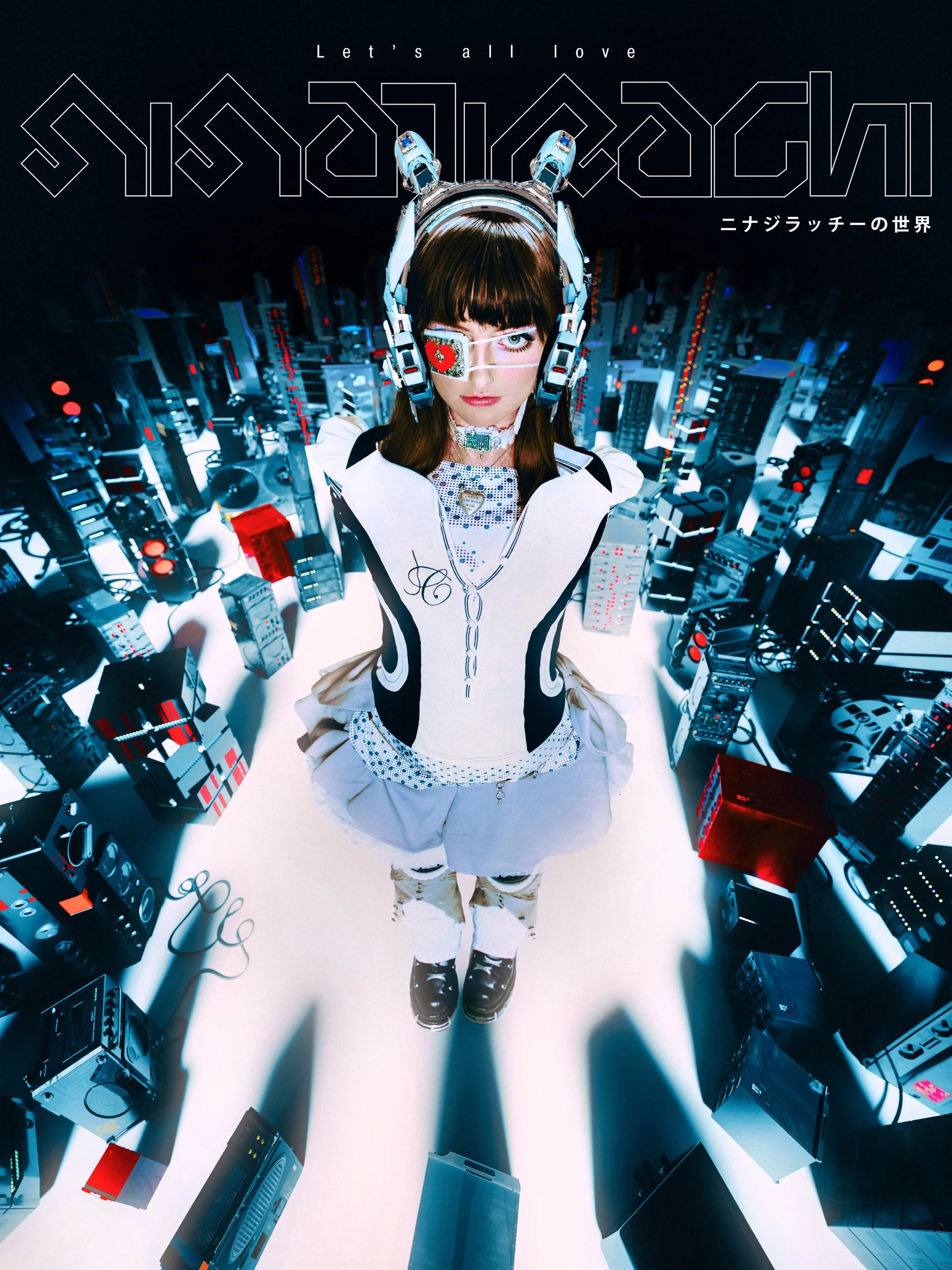
Creative Direction: Bryan Huynh
Holding the entire vision together was creative director Bryan Huynh. A concept this specific — retro gaming nostalgia meets anime fantasy meets cyber-idol aesthetic — needs someone steering every department toward the same target, from styling and makeup down to how the CGI and graphic design elements would eventually sit against the photography. Bryan's direction is what kept every piece of this production, mine included, pointed at the same singular world instead of feeling like disconnected ideas stitched together after the fact.
Why This Kind of Collaboration Matters
As a photographer, my job on a story like this is to capture Ninajirachi with the right energy, lighting, and styling to sell the fantasy in-camera — the heart eyepatch, the chrome headphones, the exact tilt of her head that makes her look like she's mid-transmission. But a concept this ambitious only becomes a finished piece of work once it passes through CGI, design, and direction. This is the kind of shoot where the photography is one layer of a much bigger build, and it's genuinely more rewarding to make because of that.
Working with a team this specific about their craft — Jinbeom's CGI, Mike's design, Bryan's direction — is exactly the kind of collaborative, concept-driven work I want to keep doing. If you're building a story that needs photography as part of a larger creative vision, this is the kind of project I'm always excited to take on.
Owen DeValk is a fashion and celebrity photographer based in Los Angeles, specializing in editorial, campaign, and concept-driven photography. View more of his work at owendevalkstudio.com.